Honey vs Maple Syrup for Priming a Farmhouse Saison
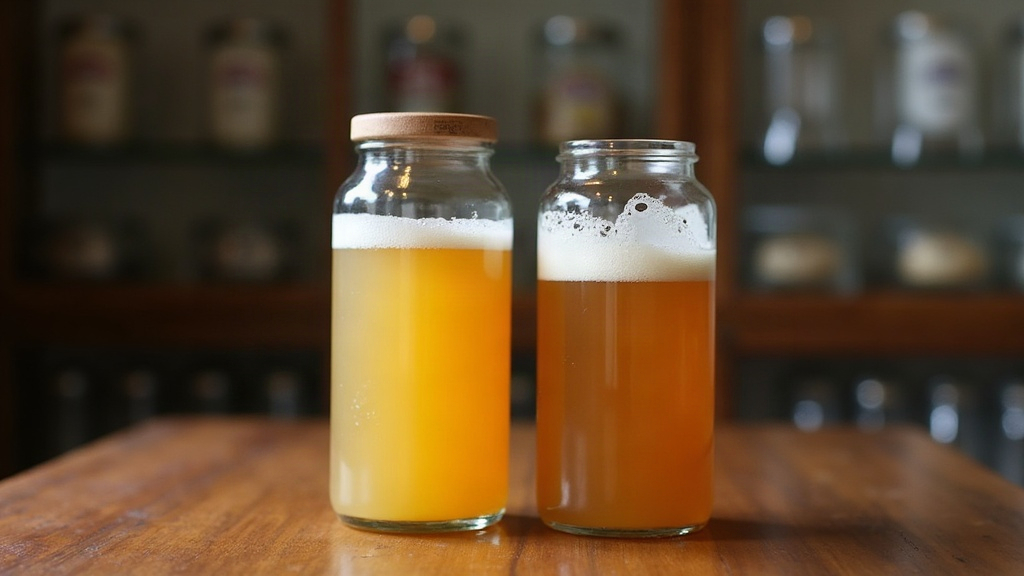
Honey or Maple Syrup for Priming a Farmhouse Saison?
If you’re bottle conditioning a farmhouse saison and can’t decide between honey and maple syrup for priming, here’s the quick take: both work fine, but they behave differently. Honey ferments out almost completely, leaving behind just a whisper of floral character. Maple syrup, on the other hand, holds onto a bit more residual complexity, though it’s a touch harder to measure precisely. For a classic dry, peppery, highly carbonated saison, most brewers reach for honey. If you’re after something more rustic and earthy, maple syrup is worth the experiment.
Why Priming Sugar Choice Matters for Saison
Saisons live and die by attenuation. Dry finish, lively carbonation (often 3.0 to 3.8 volumes of CO2), and that peppery, ester-driven character are the whole point. So the priming sugar you pick at bottling isn’t just there to create fizz. It can quietly nudge the final flavor, and in a style where delicate esters and spice notes carry the show, that nudge is noticeable.
Compare that to a stout or barleywine, where priming sugar character disappears under roast and malt sweetness. A saison offers no such cover. Its clean, dry profile means even small flavor additions get a chance to shine, for better or worse.
Honey as a Priming Sugar
Fermentability: Honey runs roughly 95-99% fermentable. Saison yeast strains are notoriously hungry, so they’ll chew through nearly all of it, leaving very little sweetness behind.
Flavor contribution: Expect faint floral or wildflower notes, more pronounced if you use raw, unfiltered honey. These can play nicely with the fruity esters thrown off by classic strains like Wyeast 3711 or Dupont.
Measuring tip: Honey is about 80% sugar by weight (this varies a bit by type), so you need slightly more of it by volume than you would table sugar. A reasonable starting point:
- 4.5 oz (128g) honey for a 5-gallon batch targeting around 3.2 volumes of CO2
- Dissolve it in ½ cup of warm water first, then stir into the bottling bucket so it distributes evenly
Pros:
- Nearly fully fermentable, so no cloying sweetness left behind
- Adds a light, pleasant aromatic lift
- Easy to find, and quality is consistent across reputable brands
Cons:
- Fermentability can shift slightly depending on honey type and moisture content
- Floral notes might clash if your saison is heavily hopped or already very spice-forward
Maple Syrup as a Priming Sugar
Fermentability: Pure maple syrup sits around 66% sugar by weight and is about 90-95% fermentable. That’s a bit less predictable than honey, since the ratio of sucrose to invert sugars shifts depending on grade and how the syrup was boiled.
Flavor contribution: Maple syrup contributes earthy, woody, almost caramelized notes. Even at small priming doses, traces of that flavor tend to survive fermentation, giving the beer a rustic, farmhouse-leaning character that fits the style well.
Measuring tip: Because it’s less sugar-dense than honey, you’ll need a larger volume:
- 5.5-6 oz (156-170g) Grade A dark maple syrup for a 5-gallon batch at roughly 3.2 volumes CO2
- Go for dark, robust syrup rather than light or amber if you want the flavor to actually show up in the glass
Pros:
- Distinctive earthy complexity that suits a farmhouse profile
- Pairs especially well with saisons built on rustic adjuncts like rye, wheat, or spelt
Cons:
- Less standardized fermentability, so there’s a slightly higher risk of under- or over-carbonating if you don’t account for the real sugar content
- Can leave a faint sweetness behind if your yeast is already stressed or flocculating hard
Side-by-Side Comparison
| Factor | Honey | Maple Syrup |
|---|---|---|
| Fermentability | 95-99% | 90-95% |
| Flavor impact | Floral, subtle | Earthy, woody |
| Measurement precision | Easier | Slightly trickier |
| Best for | Classic dry saisons | Rustic/adjunct-heavy saisons |
| Carbonation consistency | More reliable | More variable |
Practical Recommendations
- Run the numbers through a priming sugar calculator (Brewer’s Friend works well) and plug in the actual fermentable sugar percentage for honey or maple syrup. Don’t just swap it 1:1 for table sugar, that’s how you end up with gushers or flat bottles.
- Dissolve the sugar fully in boiled water before adding it to the bottling bucket. This keeps things sanitary and helps carbonation come out even across the whole batch.
- Test a few bottles first. If you’re not sure how much flavor will actually carry through, prime a small batch with each sugar and taste them side by side after 2-3 weeks of conditioning.
- Try blending the two. Some brewers split it down the middle, half honey, half maple syrup, for a more layered, nuanced finish.
Final Verdict
If you want a traditional, hop-forward, peppery saison with clean carbonation and no extra flavor noise, honey is the safer bet. It’s predictable and it gets out of the way. But if you’re brewing something more farmhouse-style, with rustic grains, wild yeast character, or time in oak, maple syrup’s earthy depth can genuinely add something worthwhile. Just double-check your math so you don’t end up under-carbonated.
Either way, you’re choosing a natural, flavorful alternative to plain corn or table sugar. It’s a small move, but it’s the kind of detail that gives your next saison batch a little personality of its own.