Fermenting Green Walnuts into Italian Nocino Liqueur
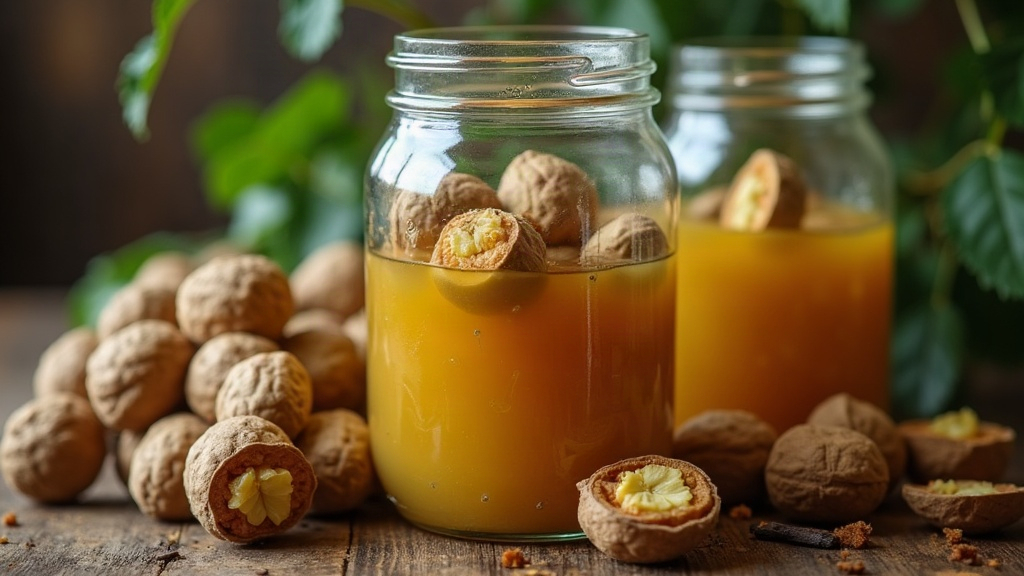
Nocino: Italy’s Green Walnut Liqueur, Made the Old Way
Nocino is a dark, spiced Italian liqueur made by steeping whole green walnuts in alcohol before their shells ever get the chance to harden. Pickers traditionally go out around the feast of St. John, June 24th, right when midsummer hits. This guide covers why that timing actually matters, what’s going on chemically during the maceration, and how you turn a bucket of unripe walnuts sitting in your kitchen into a rich, bittersweet digestivo worth putting your name on.
What Is Nocino, Exactly?
Nocino (say it: no-CHEE-no) comes from Emilia-Romagna and Modena. Makers there macerate whole green walnuts, husk, shell, immature kernel, the works, in high-proof alcohol along with sugar and warming spices: cinnamon, clove, citrus zest. Forget any walnut liqueur made from mature nuts. This one only works with unripe walnuts picked while the shell’s still soft enough to slice with a kitchen knife.
What you end up with is a syrupy, nearly black liqueur that tastes like bitter chocolate and tannin, with clove running through it and a resinous, green bite up front. Age it long enough and that sharpness mellows into something almost velvety.
Why Midsummer Timing Matters
Green walnuts give you a narrow window to work with, usually mid-to-late June in the Northern Hemisphere, though it shifts a bit depending on climate and the walnut variety you’re dealing with:
- Too early and the nut hasn’t built up enough tannin and oil yet. You’ll end up with something thin and forgettable.
- Too late and the shell starts hardening. Now you can’t cut the walnuts cleanly, and instead of green, herbal notes you get bitter, woody ones.
There’s an old test for this: take a sewing needle or a thin skewer and push it through the walnut. Slides in clean with barely any resistance? It’s ready. This moment tends to land right around the summer solstice, which is exactly why Italian folklore links nocino to St. John’s Eve. Some recipes even insist on macerating on June 23rd or 24th specifically, for the symbolism of it. But really, the science behind it has nothing to do with the calendar date and everything to do with how mature the nut is.
How Fermentation and Maceration Work Together
Here’s the thing: nocino isn’t fermentation in the beer or wine sense. No yeast is converting sugar into alcohol here. What’s actually happening is an infusion, a maceration process that mimics fermentation’s chemistry without the biology:
- Oxidation: The moment you cut into a green walnut, its juglone-rich flesh hits the air and starts oxidizing fast, turning the liquid black and building that deep, tannic backbone.
- Extraction: High-proof neat spirit, think 95-96% grain alcohol, or at the very least a strong vodka, pulls oils, tannins, and volatile aromatics straight out of the husk and the still-soft shell.
- Slow mellowing: Weeks in a sealed jar sitting in sunlight (yes, many nocino makers deliberately leave their jars outdoors in daylight to speed up color and flavor development), then months tucked away in the dark. That’s where the harsh bitterness rounds itself into something you’d actually want to sip.
Basic Nocino Recipe
Ingredients (makes about 1.5 liters):
- 20-25 green walnuts, quartered (wear gloves, seriously, the juglone will stain your skin and anything else it touches)
- 1 liter high-proof neutral spirit
- 500g sugar
- 1 cinnamon stick
- 4-5 whole cloves
- Zest of 1 organic lemon
Method:
- Quarter the walnuts and pack them into a large sterilized jar along with the spices and lemon zest.
- Pour the alcohol over the top, seal the jar tight, and park it somewhere sunny for 40-60 days. Shake or stir it every few days. Within the first week you’ll already see the liquid turning deep brown-black.
- Strain out the solids. Dissolve the sugar in a bit of warm water to make a simple syrup, then stir it in.
- Bottle it and store in a cool, dark place for at least 3 months. Most experienced nocino makers will tell you a full year of aging is where the real magic happens.
Common Questions
Can I use walnuts from a store? Almost never. Most commercial walnuts are harvested once they’re mature, past the point you need. You really need access to a walnut tree, your own, a friend’s, or a generous neighbor’s, to catch that green window.
Is it safe to eat or handle green walnuts? Yes, just wear gloves. The husks are loaded with juglone, which will stain your skin brown for days and can irritate sensitive skin if you’re not careful.
Why does my nocino taste harsh at first? Totally normal. The tannins and alcohol need time to settle in and integrate with each other. Honestly, patience is the biggest quality factor in this whole process, more than any ingredient tweak.
Do I have to macerate in sunlight? It’s tradition, and it does help with oxidation and color. That said, plenty of modern makers just use a dark cupboard instead. You lose a bit of color intensity, but the flavor depth ends up pretty similar.
Final Thoughts
Nocino is all about patience. You spend a few minutes in June cutting up walnuts, and by winter you’ve got a bottle of complex, spiced liqueur worth pouring for guests. Catch the green walnuts during that brief midsummer window, macerate with some care, then just let time do its work. The difference between a nocino aged 3 months and one aged a full year? Night and day, honestly.